

The Road Back To Arlington
A quiet drive eastward to a place of memory, gratitude, and presence
It was 6 AM, a brisk and dark morning. I headed east on I-68 for a two-and-a-half-hour drive through the Appalachian corridor.
I drove in quiet solitude on a nearly deserted highway. In this darkness there was an empty sadness. The road wound through ups and downs of hills and valleys, mirroring the journey in my mind.
As dawn silently broke over the distant Blue Ridge Mountains, I followed the sun eastward, continuing onward. My thoughts moved from darkness and emptiness toward the warmth of light ahead. The quiet majesty of the mountains seemed to draw me toward my destination.
By the time I reached the scenic George Washington Memorial Parkway, the city was awakening, people moving through their lives. To my left and below, through the tree-lined parkway, was the Potomac River. In the distance to my right stood the Washington Monument.
As I crossed the Potomac River on the Arlington Memorial Bridge, I spotted the Lincoln Memorial, just as I remembered it five short years ago. My smartphone GPS guided me to 54-4446 Leahy Drive, Arlington National Cemetery. It was a stark contrast to the paper maps, dividers, compass, radio beacons, and pencil my father used as a 20-year-old to navigate a B-29 bomber on 10-hour missions over the Pacific Ocean more than seven decades ago.
Much has changed in the last seven decades. Much remains the same.
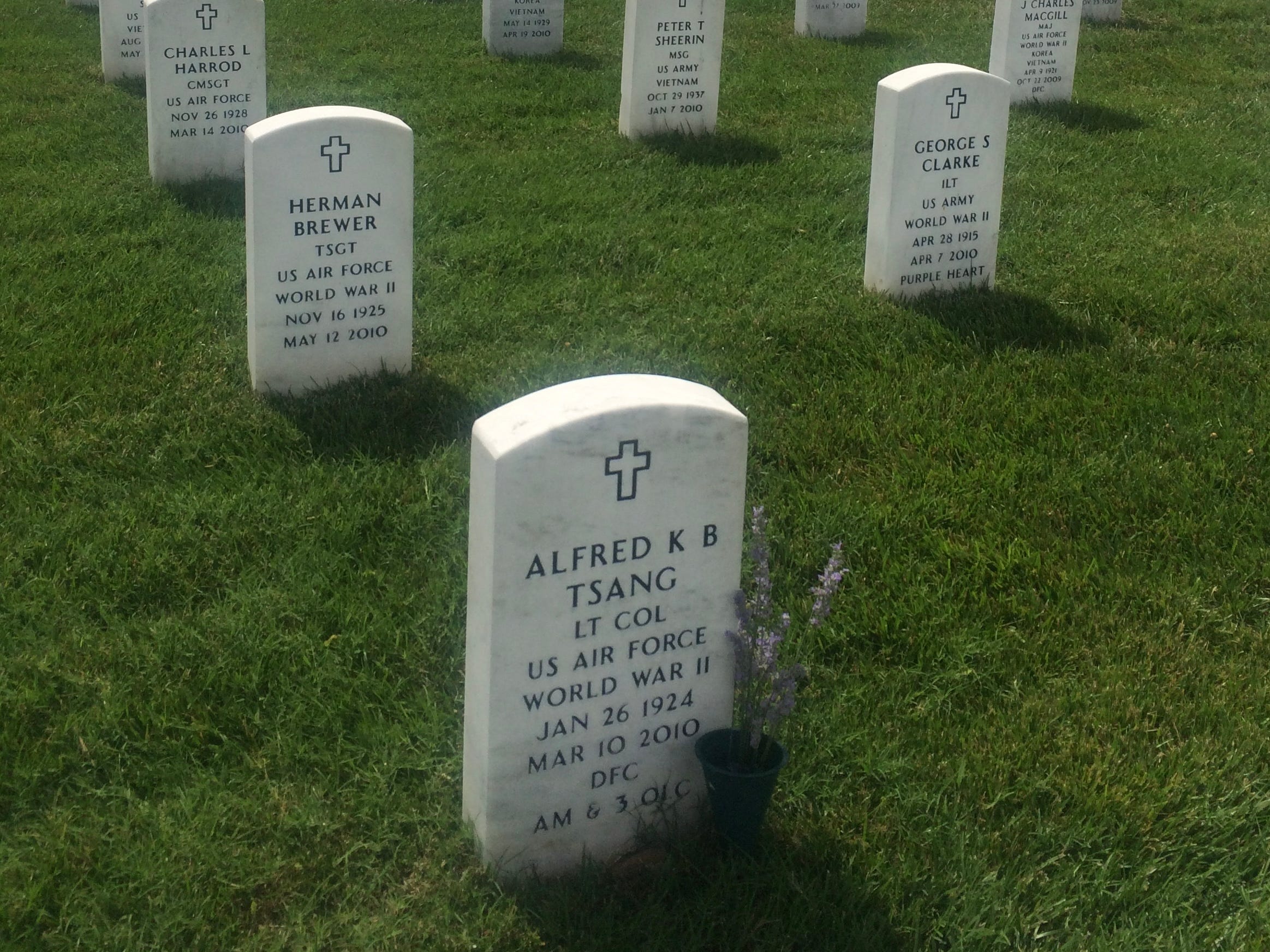
In the morning sunlight and warming air, I stood silently by my father’s gravestone, reaching out to touch the cold, smooth marble. I remembered him and thanked him—for what he taught me through how he lived, and for the sacrifices he made so I could have opportunities to make my own way in life.
I left knowing his life had meaning, and that it had made a difference.
It made me wonder what in my own life will be remembered—and what I am still shaping while I have the time.
We are always carrying something forward—and leaving something behind.
—D. Arthur Tsang